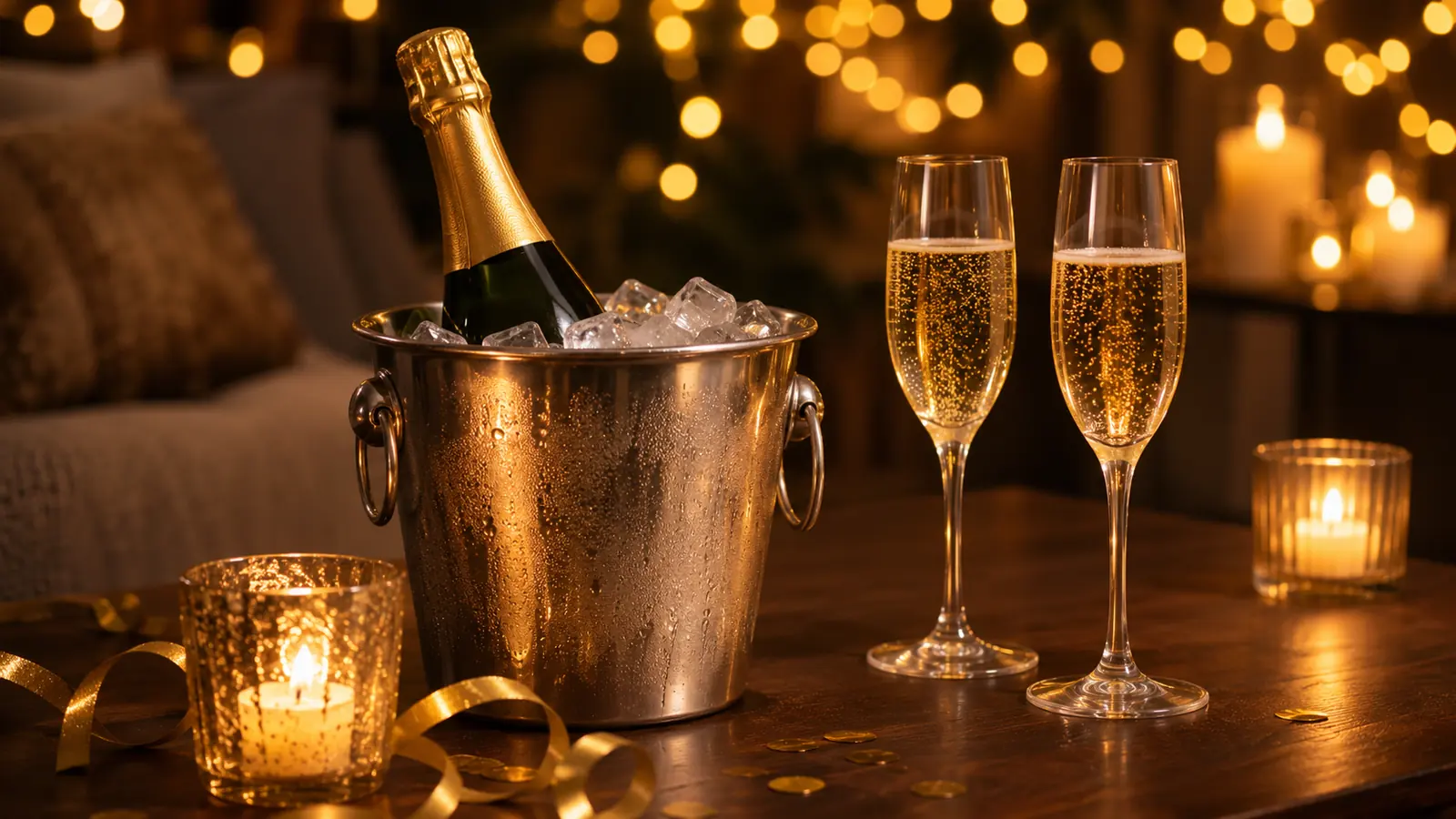
What is champagne? It's sparkling wine from the Champagne region of France, made under strict rules that include a second fermentation inside the bottle. Prosecco, cava, crémant and Ontario sparkling wine can be excellent, but they aren't champagne.
How much is champagne at the LCBO? The famous non-vintage bruts, like Moët & Chandon Brut Impérial ($83.95) and Veuve Clicquot Brut ($87.95), cost about $60 to $95 for a 750 mL bottle. Rosé champagne costs about $20 more, a half bottle of Moët is $49.95, and Dom Pérignon is $359.95. Popular cava and prosecco cost under $20.
Below: what makes champagne champagne, real LCBO prices, how to read the label, how many bottles you need, how to chill and open it safely, and when to buy for New Year's Eve.
Prices are from LCBO.com on November 26, 2026, and they change often. Check your store before you go.
The short answer
Champagne only comes from Champagne, France. Canada agreed to stop treating "champagne" as a generic name at the end of 2013, so Canadian wines can't use it.
Well-known champagnes cost about $60 to $95 at the LCBO. Big names like Moët, Veuve Clicquot and Taittinger sit at $84 to $91. Rosé adds about $20. Prestige bottles pass $150.
"Brut" means dry. It's the style most people want, and over 90% of champagne is made that way. Confusingly, "extra dry" is sweeter than brut.
You can get the same method for a third of the price. Cava, crémant and Ontario "traditional method" sparkling wines get their bubbles the same way champagne does, for about $18 to $30.
A bottle pours about six flutes. One bottle covers a midnight toast for six to eight people.
Serve it at 8 to 10°C. That's 30 minutes in an ice bucket filled with half ice, half water.
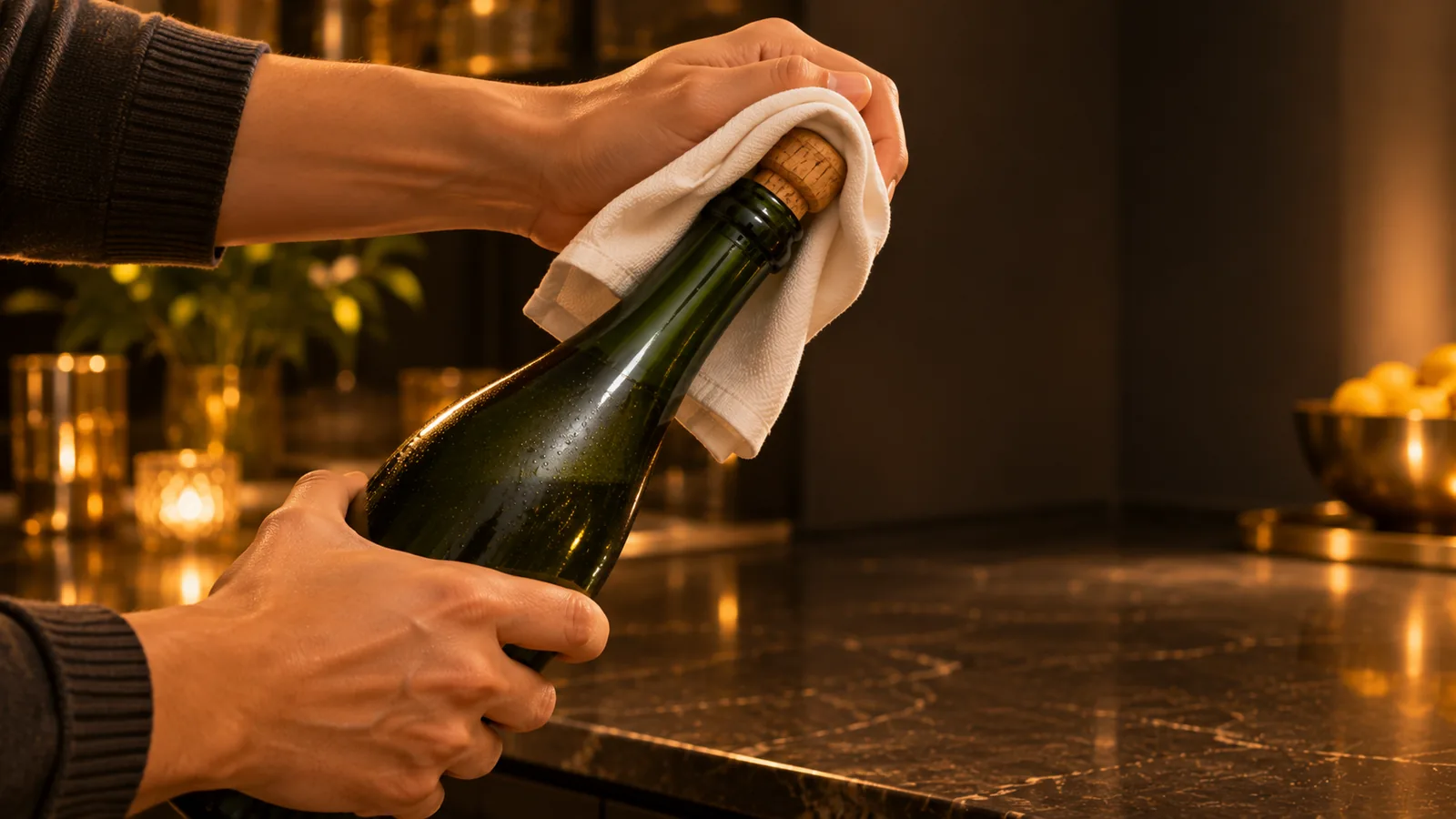
Open it with a towel, not a pop. A champagne cork can fly at about 55 km/h.
Buy before New Year's Eve. Alcohol sales and delivery in Ontario stop at 11 PM, an hour before midnight, and the LCBO is closed on New Year's Day.
What is champagne (and what isn't)?
Champagne is a protected name, like Niagara's own Icewine. To put it on a label, a wine has to follow the rules of the Champagne appellation in France:
- It comes from the Champagne region. Nowhere else.
- It's made mostly from three grapes. Pinot Noir (38% of the vineyards), Chardonnay (31%) and Meunier (31%), according to the Comité Champagne. Five rare varieties are also allowed.
- The bubbles form in the bottle. Winemakers add a little sugar and yeast to still wine, seal it, and the yeast ferments again inside the bottle. That second fermentation makes the bubbles, and it leaves about 5 to 6 bar of pressure in the bottle, roughly two to three times the pressure in a car tire.
- It ages before release. Non-vintage champagne must spend at least 15 months in the producer's cellar, and vintage champagne at least three years. Most houses age it longer.
The Comité Champagne says the name is protected in more than 130 countries. Canada protects it too: under the 2003 Canada–EU agreement on wine and spirits, Canada agreed to stop treating "Champagne" as a common name by December 31, 2013. The agreement was signed, fittingly, in Niagara-on-the-Lake. That's why bottles once sold as "Canadian champagne" are now labelled "sparkling wine."
Champagne vs prosecco vs cava vs crémant
Here's how champagne compares with the other sparkling wines on the LCBO shelf:
| Wine | Where it's from | How the bubbles get there | Minimum ageing | Example at the LCBO (750 mL) |
|---|---|---|---|---|
| Champagne | Champagne, France | Second fermentation in the bottle | 15 months (vintage: 3 years) | Moët & Chandon Brut Impérial, $83.95 |
| Prosecco | Veneto and Friuli Venezia Giulia, Italy | Second fermentation in a sealed tank | No minimum for white prosecco | Mionetto Prestige Prosecco Brut, $19.95 |
| Cava | Spain, mostly the Penedès area near Barcelona | Second fermentation in the bottle | 9 months | Freixenet Cordon Negro Brut, $17.95 |
| Crémant | Eight French regions outside Champagne, including Burgundy, Alsace and the Loire | Second fermentation in the bottle | 9 months on the yeast, sold no sooner than 12 months after bottling | Veuve Ambal Crémant de Bourgogne Grande Cuvée Brut, $24.95 |
| Ontario traditional method (VQA) | Ontario, mostly Niagara | Second fermentation in the bottle you buy | 9 months (vintage-dated: 12 months) | Trius Brut VQA, $29.95 |
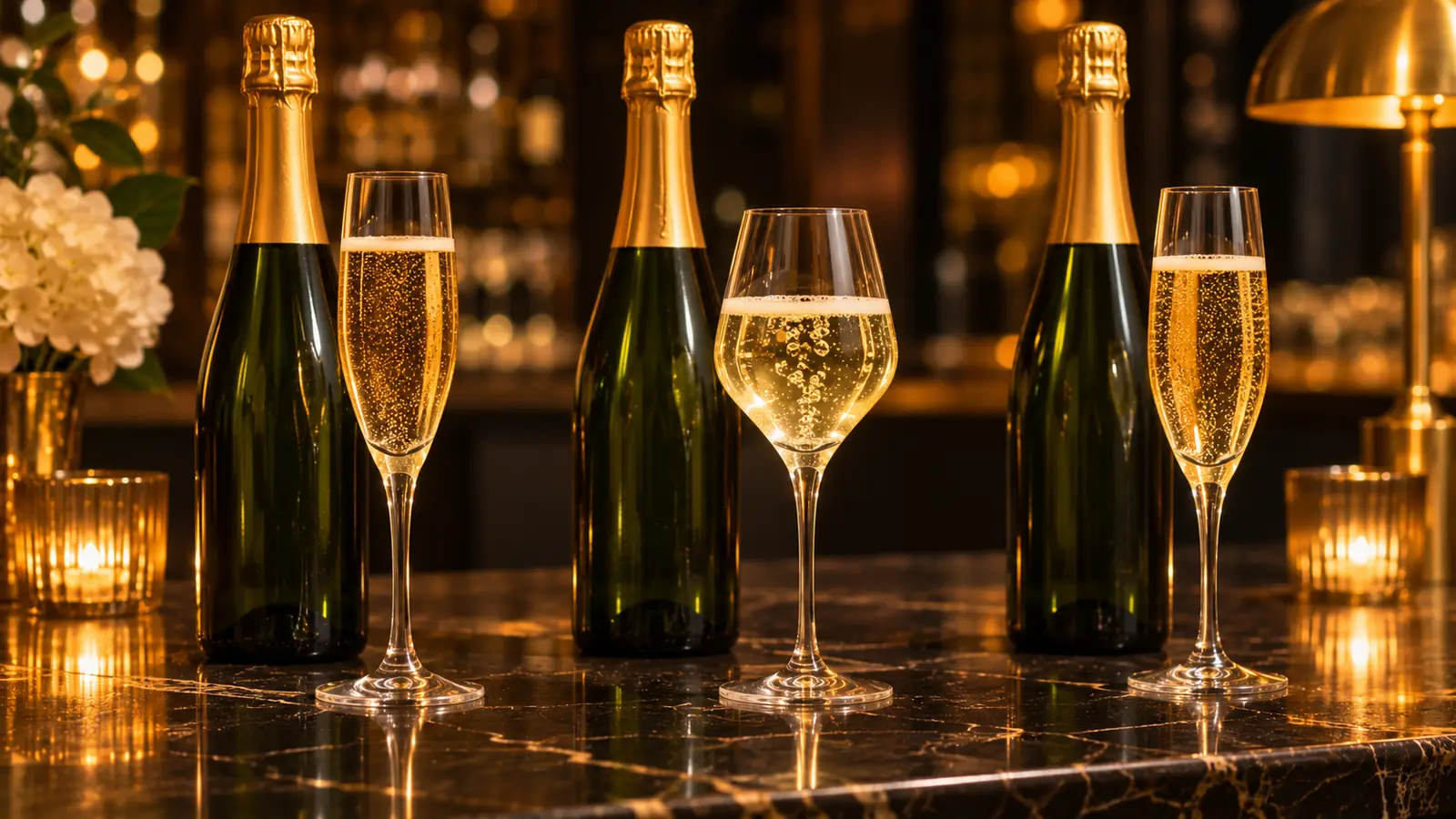
Champagne vs prosecco, in plain terms: prosecco is made mostly from the Glera grape, and its bubbles form in a big pressurized tank rather than in each bottle. That keeps it light, fruity and fresh, with flavours like pear and green apple, and it keeps the price around $20. Champagne spends months or years resting on the spent yeast in its bottle, which gives it toasty, bready, nutty notes. Neither is "better." Prosecco suits mimosas, spritzes and casual parties; champagne is the bottle for a big moment.
Cava, crémant and Ontario sparkling are the close cousins. All three use the same in-the-bottle method as champagne, often called the traditional method (you'll also see méthode traditionnelle or méthode classique on labels). They're the best way to get a champagne-like glass for $18 to $30.
Ontario's rules are strict, too. For a VQA wine to say "traditional method," its bubbles must come only from a second fermentation in the same glass bottle that's sold to you, it must rest on its yeast for at least 9 months (12 if it shows a vintage), and it must be made entirely from classic European grape varieties. Producers often go well past the minimum: Trius says its Brut rests on the yeast for up to two years.
How much is champagne at the LCBO?
Here's a cross-section of champagne on LCBO.com, from the cheapest bottle to the priciest:
| Champagne | Style | Size | LCBO price |
|---|---|---|---|
| Moët & Chandon Brut Impérial | Brut, non-vintage | 375 mL | $49.95 |
| Nicolas Feuillatte Brut | Brut, non-vintage | 750 mL | $62.95 |
| Piper-Heidsieck Brut | Brut, non-vintage | 750 mL | $71.45 |
| Moët & Chandon Brut Impérial | Brut, non-vintage | 750 mL | $83.95 |
| Veuve Clicquot Brut ("Yellow Label") | Brut, non-vintage | 750 mL | $87.95 |
| Taittinger Brut Réserve | Brut, non-vintage | 750 mL | $91.15 |
| Moët & Chandon Nectar Impérial | Demi-sec (sweet) | 750 mL | $94.95 |
| Moët & Chandon Brut Rosé | Rosé | 750 mL | $103.95 |
| Veuve Clicquot Brut Rosé | Rosé | 750 mL | $107.95 |
| Ruinart Blanc de Blancs (VINTAGES) | Blanc de blancs | 750 mL | $165.95 |
| Veuve Clicquot Brut | Brut, magnum | 1.5 L | $192.95 |
| Dom Pérignon Brut Vintage (VINTAGES) | Vintage, prestige | 750 mL | $359.95 |
LCBO.com prices on November 26, 2026, including the bottle deposit. Sales come and go, and VINTAGES stock varies by store.
The quick rule:
- About $60 to $75 for a lower-priced champagne from a well-known house.
- About $84 to $91 for the famous labels: Moët, Veuve Clicquot, Taittinger.
- About $20 more for rosé. Moët's rosé costs $20 more than its brut, and so does Veuve's.
- $150 and up for prestige cuvées and blanc de blancs.
Champagne bottle sizes
- Half bottle (375 mL): about three flutes. Handy for two people, but it costs more per glass. Two Moët halves cost $99.90, against $83.95 for one full bottle.
- Standard bottle (750 mL): about six flutes of 125 mL, according to the Comité Champagne.
- Magnum (1.5 L): two bottles' worth, about twelve flutes. A magnum looks spectacular at a party, but it can cost more than two bottles. Veuve's magnum is $192.95, against $175.90 for two 750s.
The best champagne for your budget
There's no single best champagne. There's the best bottle for your budget and your crowd. Here's what each price point gets you at the LCBO right now:
- Under $30, champagne's method without the name. Freixenet Cordon Negro cava ($17.95), Veuve Ambal Crémant de Bourgogne ($24.95), or a Niagara sparkler like Trius Brut or Henry of Pelham Cuvée Catharine Brut ($29.95 each). Great for mimosas, big crowds and the second round.
- Real champagne for about $60 to $75. Nicolas Feuillatte Brut ($62.95) and Piper-Heidsieck Brut ($71.45). The smart buy when the toast has to say "champagne."
- The names everyone knows, $84 to $91. Moët & Chandon Brut Impérial, Veuve Clicquot Brut and Taittinger Brut Réserve. The safest gift, because the label does the talking.
- For rosé fans. Moët & Chandon Brut Rosé ($103.95) or Veuve Clicquot Brut Rosé ($107.95).
- For a sweet tooth or dessert. Moët & Chandon Nectar Impérial ($94.95) is a demi-sec, much sweeter than brut. Try it with fruit tarts or cake.
- The splurge. Ruinart Blanc de Blancs ($165.95) or Dom Pérignon ($359.95).
How to read a champagne label
Brut, extra brut and the sweetness scale
The word that matters most on the label tells you how sweet the champagne is. It reflects the dosage, a small dose of sugar added just before the final cork goes in. The Comité Champagne's scale, in grams of sugar per litre:
| Label term | Sugar per litre | What it tastes like |
|---|---|---|
| Brut nature (also pas dosé, dosage zéro) | Under 3 g | Bone dry, no sugar added |
| Extra brut | 0 to 6 g | Very dry |
| Brut | Under 12 g | Dry. The classic style |
| Extra dry | 12 to 17 g | Off-dry. Sweeter than brut |
| Sec | 17 to 32 g | Noticeably sweet |
| Demi-sec | 32 to 50 g | Sweet, good with dessert |
| Doux | Over 50 g | Very sweet, and rare |
Brut is the default. The Comité Champagne says over 90% of champagne is brut. The LCBO lists sugar on every product page, so you can check: Moët Brut Impérial has 8 g/L, Moët Nectar Impérial 45 g/L, and Dom Pérignon just 4 g/L.
The trap is "extra dry." It sounds drier than brut, but it's sweeter. If you want a dry glass, look for brut or extra brut.
Non-vintage vs vintage
- Non-vintage (NV) champagne has no year on the label. It's a blend of wines from several harvests, including older "reserve" wines, so each house's style stays consistent year after year. The Comité Champagne calls non-vintage brut the most common champagne, and it's the right choice for a party.
- Vintage champagne is made only from a single year's harvest, which the label shows. The rules require at least three years of ageing, so it costs more and often tastes richer and more complex. Dom Pérignon is a vintage champagne.
Rosé, blanc de blancs and blanc de noirs
- Rosé champagne is often made by blending 5 to 20% red wine into white wine before the second fermentation. Other houses leave the juice of black grapes on their skins for a few hours to pick up colour.
- Blanc de blancs means "white from whites." It's made only from white grapes, usually Chardonnay, and tends to be light, crisp and elegant.
- Blanc de noirs means "white from blacks." It's made only from Pinot Noir and/or Meunier, pressed gently so the juice stays pale, and tends to be fuller and richer.
How many bottles of champagne do you need?
A 750 mL bottle pours about six flutes, or eight smaller toast pours. From there:
- Just a midnight toast: one bottle for every six to eight guests.
- Bubbles all night: one bottle for every two or three guests.
- Always buy one extra. Someone opens a bottle early, every time.
A money-saving trick: pour champagne for the toast and a cava, crémant or Ontario traditional-method sparkler for the rest of the night. For beer, wine and spirits counts by party size, use our party alcohol calculator. The New Year's Eve version of the math is in our guide to LCBO New Year's hours.
How to chill champagne
The Comité Champagne recommends serving champagne at 8 to 10°C: cold, but not so cold that you can't taste it.
- Fastest: an ice bucket. Fill it with half ice and half water, then sink the bottle in for about 30 minutes. Ice alone doesn't touch enough of the glass; the water is what chills it.
- Slower: the fridge. Lay the bottle at the bottom of the fridge a few hours before you open it.
- Skip the freezer. It's easy to forget a bottle in there, and frozen wine expands.
- Keep it cold between pours. Put the open bottle back in the bucket.
A cold bottle is also a safer bottle: gas expands when it's warm, so a warm champagne is more likely to pop its cork on its own.
How to open a champagne bottle safely
The pop looks great in movies, but corks hurt people. According to the American Academy of Ophthalmology, a champagne cork can leave the bottle at up to 34 mph (about 55 km/h), fast enough to shatter glass, and a cork to the eye can cause bleeding, abrasions and even glaucoma. Here's how to do it quietly and safely:
- Chill the bottle and don't shake it. Shaking builds pressure.
- Peel off the foil and loosen the wire cage. From the moment the cage loosens, keep a thumb on top of the cork.
- Drape a towel over the top and grip the cork through it.
- Tilt the bottle to about 45 degrees, pointed away from everyone, including yourself, and away from windows and light fixtures.
- Hold the cork still and slowly twist the bottle, not the cork.
- Let the pressure ease the cork out. Press down on the cork as it moves so it doesn't fly. You want a soft sigh, not a bang.
If a cork hits someone in the eye, get them to an eye doctor or the emergency department right away, even if it seems minor. Eye injuries can get worse over time.
How to pour and serve champagne
- Use a tall, tulip-shaped glass if you have one. That's the Comité Champagne's recommendation. Flutes are fine. Wide, shallow coupes look glamorous, but the bubbles tend to fade faster.
- Pour slowly, down the side of a tilted glass, so it doesn't foam over. Fill it partway, let the foam settle, then top it up.
- Pair it with salty, crispy food. Chips, popcorn, fried chicken, oysters and sushi all work. Rosé champagne goes well with roast chicken or turkey.
How long does champagne last once opened?
About one or two days, if you seal it right away with a proper champagne stopper (the kind with clamps) and keep it in the fridge, according to the Comité Champagne. After that, it goes flat. Use the leftovers in mimosas or a French 75.
Unopened, store it somewhere dark, cool (ideally 10 to 15°C) and free of strong smells. There's no need to age a non-vintage bottle you're buying for the holidays.
Three easy champagne cocktails
These work just as well with cava, crémant or prosecco, which is a good reason to save the real champagne for sipping:
- Mimosa: half sparkling wine, half chilled orange juice. Pour the bubbles first.
- French 75: shake 1 oz gin, ½ oz fresh lemon juice and ½ oz simple syrup with ice, strain into a flute, and top with about 3 oz of sparkling wine.
- Ice wine sparkler: about ½ oz of Niagara ice wine, topped with dry sparkling wine. More in our ice wine guide.
Champagne on New Year's Eve: timing in Ontario
Ontario searches for champagne peak every December, and New Year's Eve is the one night when the shopping deadline and the celebration are an hour apart.
- Buy by December 30, or early on the 31st. The LCBO is open on Thursday, December 31, but the sparkling shelves get picked over that evening. Check your store's hours on the LCBO store locator.
- 11 PM is the legal cutoff. In Ontario, no store can sell alcohol after 11 PM, and no licensed service can deliver it, on New Year's Eve like any other night. That's an hour before midnight. We explain the rules in How Late Can You Get Alcohol Delivered in Ontario?
- The LCBO is closed all day on New Year's Day (Friday, January 1, 2027). Buy the brunch mimosa bubbles on the 31st. All the details are in Is the LCBO Open on New Year's Day?
- Christmas comes first. The LCBO closes early on Christmas Eve and stays closed on Christmas Day. If champagne is a gift, see what time the LCBO closes on Christmas Eve and every other date in our LCBO holiday hours guide.
- Plan the chill. Bottles go in the fridge by the afternoon. The toast bottle goes into a bucket of ice and water at about 11:30 PM.
- Plan the ride home. Police run Festive RIDE checks through the holidays. Our guide to Ontario's legal alcohol limit explains why two drinks can be enough to put some drivers in the warn range.
Where After Dark Quick fits
We don't carry champagne, so buy your toast bottle at the LCBO ahead of time. We cover the rest of the night.
We deliver beer, wine and spirits to homes, rentals and hotels across Niagara Falls, St. Catharines, Niagara-on-the-Lake and the rest of Niagara, plus Hamilton and Burlington. Order any time; alcohol delivery runs 9 AM to 11 PM, New Year's Eve and New Year's Day included.
- More bubbles: Luc Belaire Rosé, a French sparkling rosé. It isn't champagne, it's a little sweeter than brut, and its matte-black bottle looks the part at midnight.
- For French 75s: Bombay Sapphire Gin.
- For everyone who isn't drinking bubbles: beer, wine and vodka, from Tito's to Grey Goose.
- 19+, ID checked at the door, every order. Order by phone, no app needed, and pay at the door.
On New Year's Eve, call before 10:30 PM. Every order has to be delivered before the 11 PM cutoff.
FAQ — LCBO champagne
How much is champagne at the LCBO? About $60 to $95 for a 750 mL bottle of a well-known non-vintage brut. In November 2026, LCBO.com listed Nicolas Feuillatte Brut at $62.95, Moët & Chandon Brut Impérial at $83.95, Veuve Clicquot Brut at $87.95 and Taittinger Brut Réserve at $91.15. Rosé costs about $20 more, and Dom Pérignon is $359.95.
How much is a bottle of Moët at the LCBO? $83.95 for a 750 mL bottle of Moët & Chandon Brut Impérial on LCBO.com in November 2026. The 375 mL half bottle is $49.95, the sweeter Nectar Impérial is $94.95 and the Brut Rosé is $103.95.
What's the difference between champagne and prosecco? Where it's made and how it gets its bubbles. Champagne comes only from Champagne, France, gets its bubbles from a second fermentation in each bottle, and ages at least 15 months. Prosecco comes from northeast Italy, is made mostly from the Glera grape, and gets its bubbles in a large tank. Prosecco is lighter and fruitier, and it costs about $20 at the LCBO.
What does brut mean on champagne? Dry. Brut champagne has less than 12 grams of sugar per litre, and it's the most common style. Extra brut and brut nature are drier still.
Is extra dry champagne sweeter than brut? Yes. Despite the name, extra dry champagne has 12 to 17 grams of sugar per litre, more than brut's limit of 12. If you want a dry glass, buy brut or extra brut.
What's the best champagne at the LCBO? It depends on your budget. Nicolas Feuillatte Brut ($62.95) and Piper-Heidsieck Brut ($71.45) are strong value picks. Moët & Chandon, Veuve Clicquot and Taittinger ($84 to $91) are the safest gifts. For under $30, a cava, crémant or Ontario traditional-method sparkler gives you champagne's method without the name.
Can Canadian sparkling wine be called champagne? No. Under the 2003 Canada–EU wine and spirits agreement, signed in Niagara-on-the-Lake, Canada stopped treating "Champagne" as a common name at the end of 2013. Ontario's best equivalent is VQA sparkling wine labelled "traditional method."
How long does it take to chill champagne? About 30 minutes in an ice bucket filled with half ice and half water, or a few hours in the fridge. The ideal serving temperature is 8 to 10°C.
How do you open champagne safely? Slowly, with a towel over the cork. Remove the foil and cage while keeping a thumb on the cork, tilt the bottle to about 45 degrees away from everyone, hold the cork and twist the bottle until the cork eases out. A cork can fly at up to 34 mph (about 55 km/h).
How many glasses are in a bottle of champagne? About six. A standard 750 mL bottle pours about six 125 mL flutes, or eight smaller toast pours. A magnum pours about twelve.
How long does champagne last once opened? One or two days with a proper champagne stopper, kept in the fridge. After that it goes flat.
Can I buy champagne after 11 PM on New Year's Eve in Ontario? No. Ontario stores must stop selling alcohol at 11 PM, and licensed delivery stops at 11 PM too, on New Year's Eve like every other night. Buy your champagne by December 30 or early on the 31st.
The bottom line
Real champagne comes from one place in France, and at the LCBO it costs about $60 to $95 for the bottles most people know. If the label just needs to impress, Moët, Veuve Clicquot or Taittinger will do it. If you're pouring for a crowd, cava, crémant or a Niagara traditional-method sparkler gives you the same kind of bubbles for a third of the price.
Buy before the rush, chill it in ice and water, open it under a towel, and toast before 11 PM decides it for you. And if the party runs past the toast, we deliver beer, wine and spirits across Niagara and Hamilton until the legal 11 PM cutoff. Call 416-627-7846.