What's the legal alcohol limit in Ontario? The criminal limit is 0.08: 80 milligrams of alcohol in 100 millilitres of blood. But Ontario's own penalties start well before that. At 0.05, police can take your licence at the roadside. And if you're 21 or under, or you hold a G1, G2, M1 or M2, the limit is zero.
So the honest answer to "how many drinks can you have and drive?" is smaller than most people think, and for a lot of drivers it's none. Here are the numbers, what changed in 2026, how RIDE checks work over the holidays, and the easiest way to never have to do the math.
This is general information, not legal advice. The penalties below are from Ontario's Ministry of Transportation and the Criminal Code as of November 2026.
The short answer
0.08 is the criminal limit. A blood alcohol concentration (BAC) of 0.08 or more is a Criminal Code offence anywhere in Canada.
0.05 is where Ontario's penalties start. BAC from 0.05 to 0.079 is the warn range. It isn't a crime, but it means an immediate roadside licence suspension, 7 days the first time since Ontario toughened the rules in 2026.
Some drivers must be at zero. Drivers 21 and under, G1, G2, M1 and M2 licence holders, and commercial drivers can't have any alcohol in their system.
There's no safe number of drinks. Your size, your sex, what you ate and how fast you drank all change your BAC. Two drinks can put some people in the warn range.
Police don't need a reason to test you. Any driver who's lawfully stopped, including at a RIDE check, can be asked for a breath sample on the spot. Refusing is treated like blowing over.
Over 0.08 costs you your licence for 90 days, on the spot. Then comes the criminal case: a minimum $1,000 fine and at least a one-year licence suspension on a first conviction.
Ontario's alcohol limits at a glance
| Your BAC | Who it applies to | What happens at the roadside |
|---|---|---|
| Any alcohol (over 0.00) | Drivers 21 and under; G1, G2, M1, M2; commercial drivers | Immediate suspension (7 days first time for young and novice drivers), $250 penalty |
| 0.05 to 0.079 (warn range) | All other drivers | Immediate suspension of 7, 14 or 30 days, $250 to $450 penalty |
| 0.08 or more, or refusing a test | Everyone | 90-day suspension, 7-day vehicle impoundment, $550 penalty, criminal charge |
What 0.08 actually means
BAC is a measure of how much alcohol is in your blood. 0.08 means 80 mg of alcohol per 100 mL of blood. At the roadside, police measure it with a breath screening device. If you fail, you take a second test on an approved instrument, usually at the station.
Two details catch people out:
- The test covers the two hours after you drive. Under section 320.14 of the Criminal Code, it's an offence to be at or over 0.08 within two hours of driving. The drink you had right before getting in the car still counts once it reaches your blood.
- You can be charged below 0.08. The same section makes it a crime to drive while your ability is impaired to any degree by alcohol. If your driving shows it, the number on the screen isn't your defence.
How many drinks can you have and drive in Ontario?
There's no number that works for everyone, and any chart that gives you one is a guess. But you can understand why the answer is "fewer than you think" by starting with what a drink actually is.
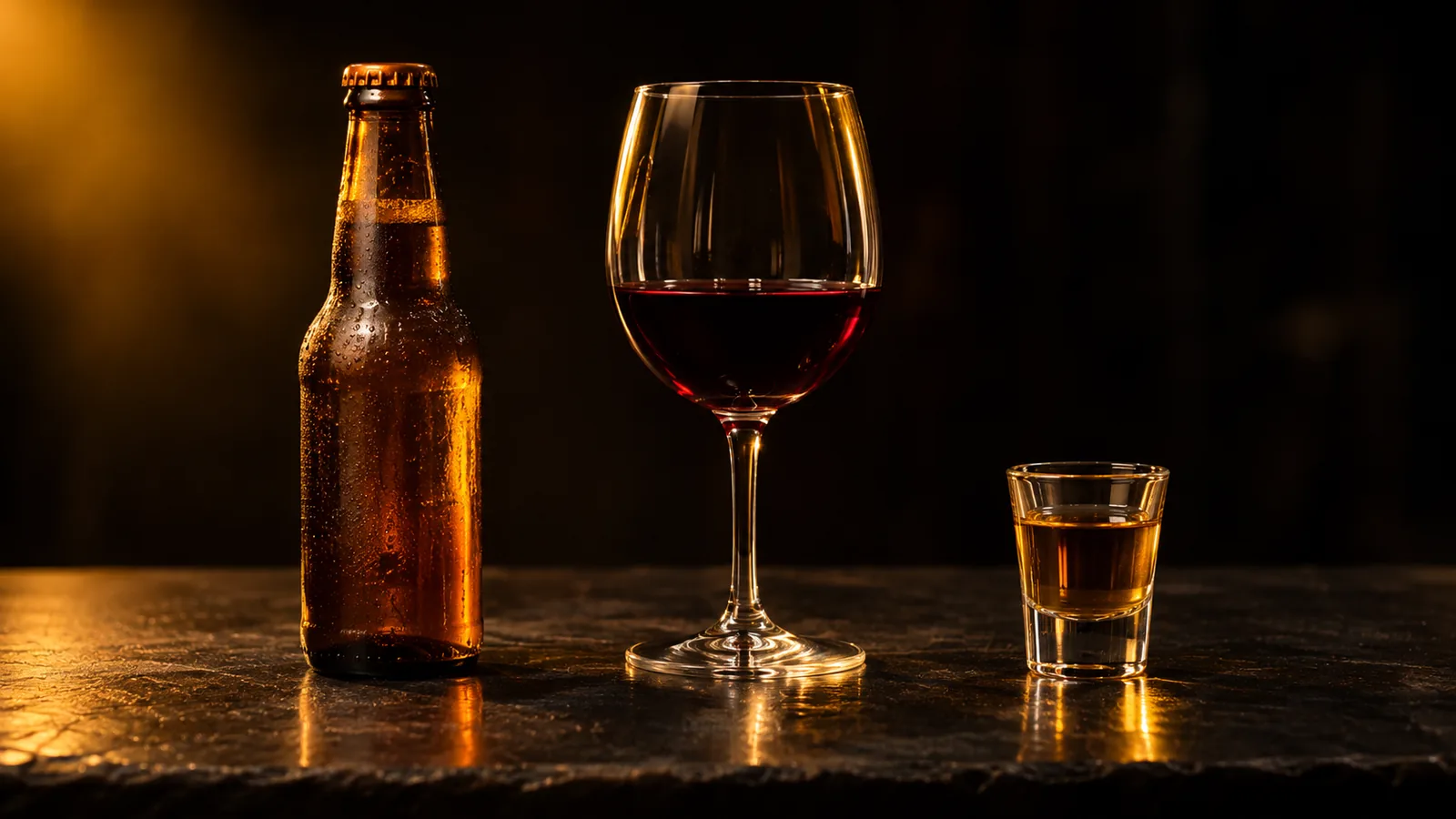
In Canada, a standard drink is 13.45 grams of pure alcohol. That's:
- a 341 mL (12 oz) bottle of 5% beer, cider or cooler
- a 142 mL (5 oz) glass of 12% wine
- a 43 mL (1.5 oz) shot of 40% spirits
Hardly anyone drinks in standard drinks, though. Here's what common pours really add up to:
| What you ordered | Standard drinks |
|---|---|
| 341 mL bottle of 5% beer | 1 |
| 473 mL tallboy of 5% beer | about 1.4 |
| 20 oz (568 mL) pub pint of 5% beer | about 1.7 |
| 473 mL tall can of 7% craft IPA | about 2 |
| 9 oz restaurant glass of 13% wine | about 2 |
| Double (3 oz) of 40% spirits | 2 |
| 750 mL bottle of 13% wine | about 5.7 |
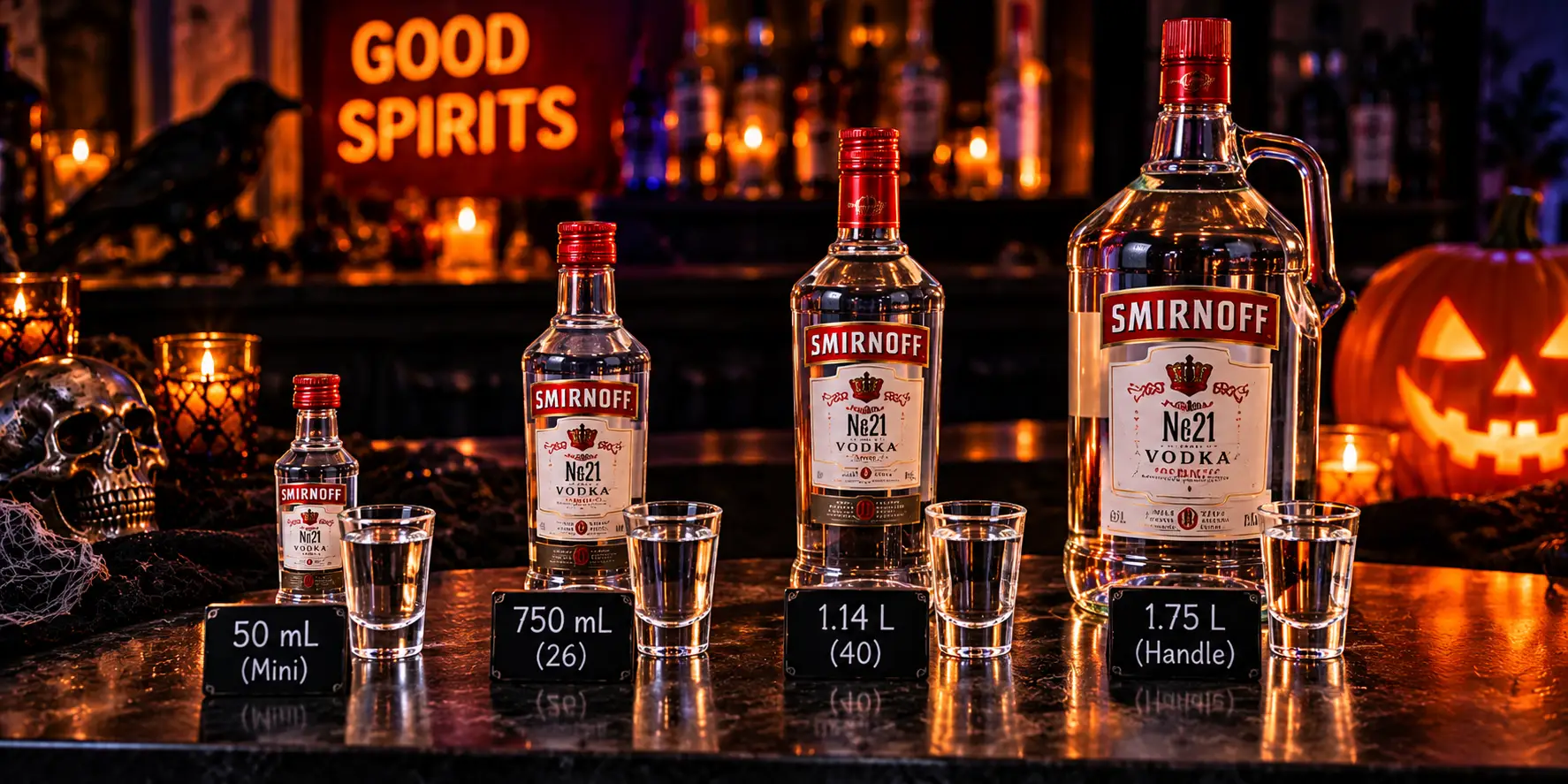
So "I only had two pints" can be more than three standard drinks. For more on Canadian bottle sizes, see our guide to how many shots are in a 26.
What those drinks do to your BAC depends on:
- Body size. A smaller body has less water to dilute the alcohol.
- Sex. Women generally reach a higher BAC than men of the same weight after the same drinks.
- Food. Drinking on an empty stomach makes your BAC climb faster and peak higher.
- Speed. Three drinks in an hour hit harder than three across an evening.
By standard BAC estimates, two standard drinks in an hour can put a smaller woman into the warn range, and four in two hours can do the same to an average-sized man. That's why "I feel fine" is a bad test: you can feel normal at 0.06.
Your BAC can keep rising after your last drink
Alcohol keeps moving from your stomach into your blood for a while after you stop. Leave the bar right after a last drink and your BAC can be higher at the RIDE check than when you paid the bill.
Only time brings it down
Your liver clears alcohol at a fixed pace, roughly one standard drink an hour. Coffee, water, a big meal after the fact or a cold shower don't speed it up. They can make you feel more awake, but they don't lower your BAC.
That's also why the morning after is a real risk. Finish a big night at 1 AM and you can still be in the warn range, or over 0.08, when you drive to work.
Ontario's impaired driving penalties in 2026
Ontario has two layers of penalties: immediate roadside penalties under the Highway Traffic Act, and criminal penalties if you're charged and convicted under the Criminal Code.
Warn range: BAC 0.05 to 0.079
| Occurrence | Roadside suspension | Penalty | Also required |
|---|---|---|---|
| First | 7 days | $250 | 8-hour education course |
| Second | 14 days | $350 | 16-hour treatment program |
| Third | 30 days | $450 | 16-hour treatment program, 6 months with an ignition interlock |
A licence reinstatement fee applies every time. Failing a roadside sobriety test can trigger the same penalties.
What changed in 2026: Ontario doubled the first two suspensions. A first warn-range suspension used to be 3 days and a second used to be 7. They're now 7 and 14, and the education course starts at the first occurrence instead of the second.
Over 0.08, or refusing a breath test
At the roadside, on a first occurrence:
- Immediate 90-day licence suspension
- 7-day vehicle impoundment, even if the car isn't yours
- $550 penalty, plus an 8-hour education course and the reinstatement fee
Then the criminal case. The minimum fines on a first conviction are:
- $1,000 at 0.08 to 0.119
- $1,500 at 0.12 to 0.159
- $2,000 at 0.16 or higher
- $2,000 for refusing to give a sample
A second conviction carries a minimum of 30 days in jail, and a third at least 120 days.
Your Ontario licence is suspended for at least one year on a first conviction, followed by at least a year with an ignition interlock. A second conviction within 10 years means at least three years; a third means a lifetime suspension. And you'll carry a criminal record and an insurance rate that stays high for years.
Young and novice drivers
If you're 21 or under, or you hold a G1, G2, M1 or M2, any alcohol in your system means a 7-day suspension and a $250 penalty the first time, plus an education course. If you're convicted, you also face a $60 to $1,000 fine, and your licence can be suspended for another 30 or 90 days or cancelled.
That rule follows you even when you're legally allowed to drink. A 19-year-old can buy a beer in Ontario but can't drive after it. More on that in our guide to the drinking age in Niagara Falls.
RIDE checks and mandatory alcohol screening
Since December 18, 2018, police across Canada no longer need to suspect you've been drinking to test you. Under section 320.27(2) of the Criminal Code, an officer who has an approved screening device can demand a breath sample from any driver they've lawfully stopped. That includes every car at a RIDE check.
RIDE stands for Reduce Impaired Driving Everywhere. Police run checks year-round, but the big push is the holiday season. In 2025, the OPP's Festive RIDE campaign ran from November 20 to New Year's Day. Municipal forces, including Niagara Regional Police and Hamilton Police, run their own holiday checks too.
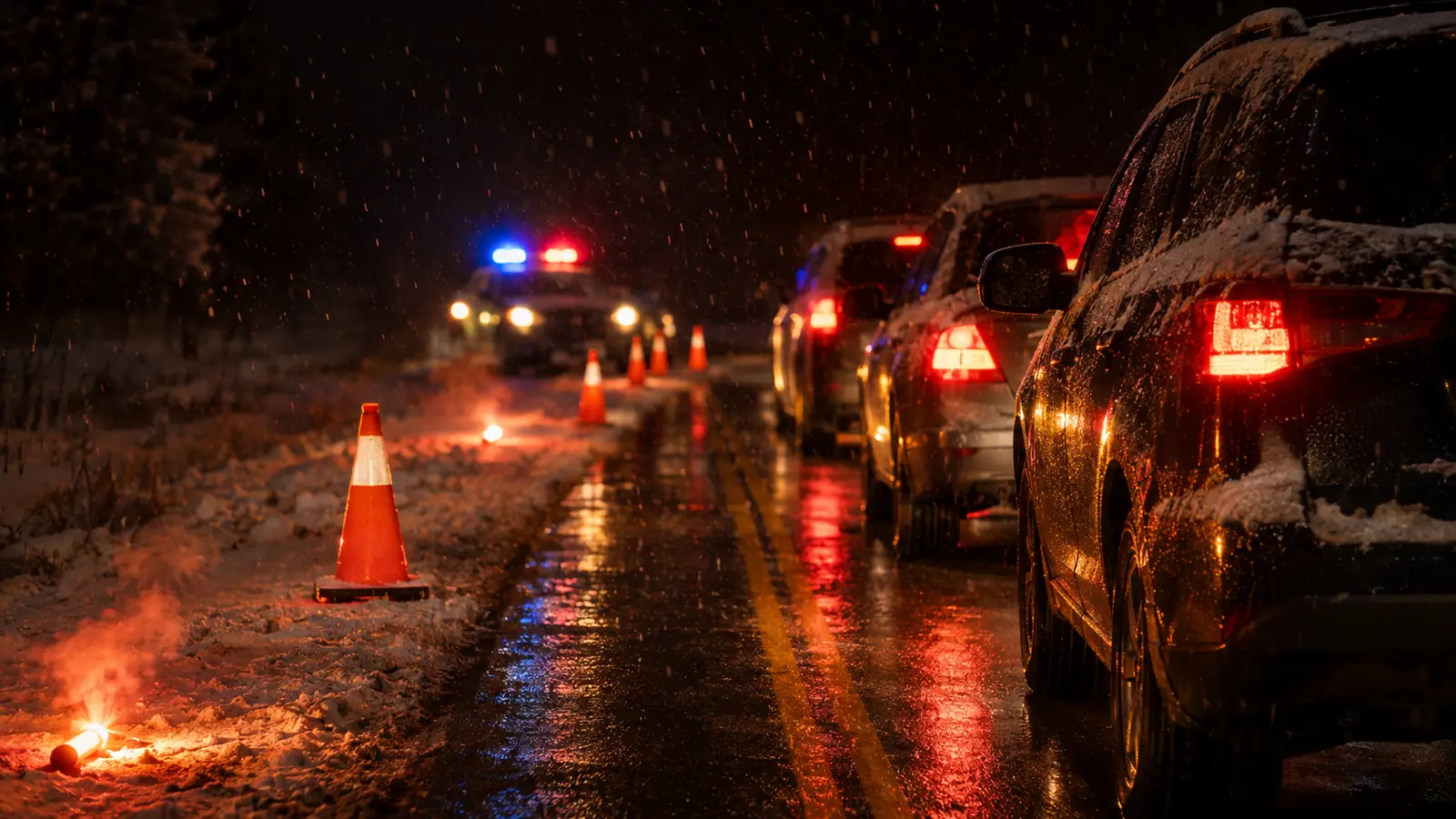
If you're stopped:
- You have to provide the sample. Refusing carries the same 90-day suspension and impoundment as failing, plus a criminal charge with a $2,000 minimum fine.
- "Just one" can still show. A screening device can register the warn range. For young and novice drivers, any reading counts.
- A pass isn't a green light. If an officer sees signs of impairment, you can still be charged.
Can you have open alcohol in your car in Ontario?
No, not within reach. Under section 42 of Ontario's Liquor Licence and Control Act, you can't drive with alcohol in the vehicle unless it's:
- unopened, with the seal unbroken, or
- packed in baggage that's closed up, or otherwise out of reach of everyone in the car.
In practice, that means the trunk. A recorked bottle of wine from dinner, a half-finished 26 from the party, or an open case of beer on the back seat all count as open liquor. Police can search a vehicle without a warrant if they reasonably believe alcohol is being kept in it illegally.
The trip that causes the trouble: the second run
Most drink-driving isn't planned. It's the party that runs out at 9:30. Someone who "only had two" offers to make a quick run to the store, and nobody does the math.
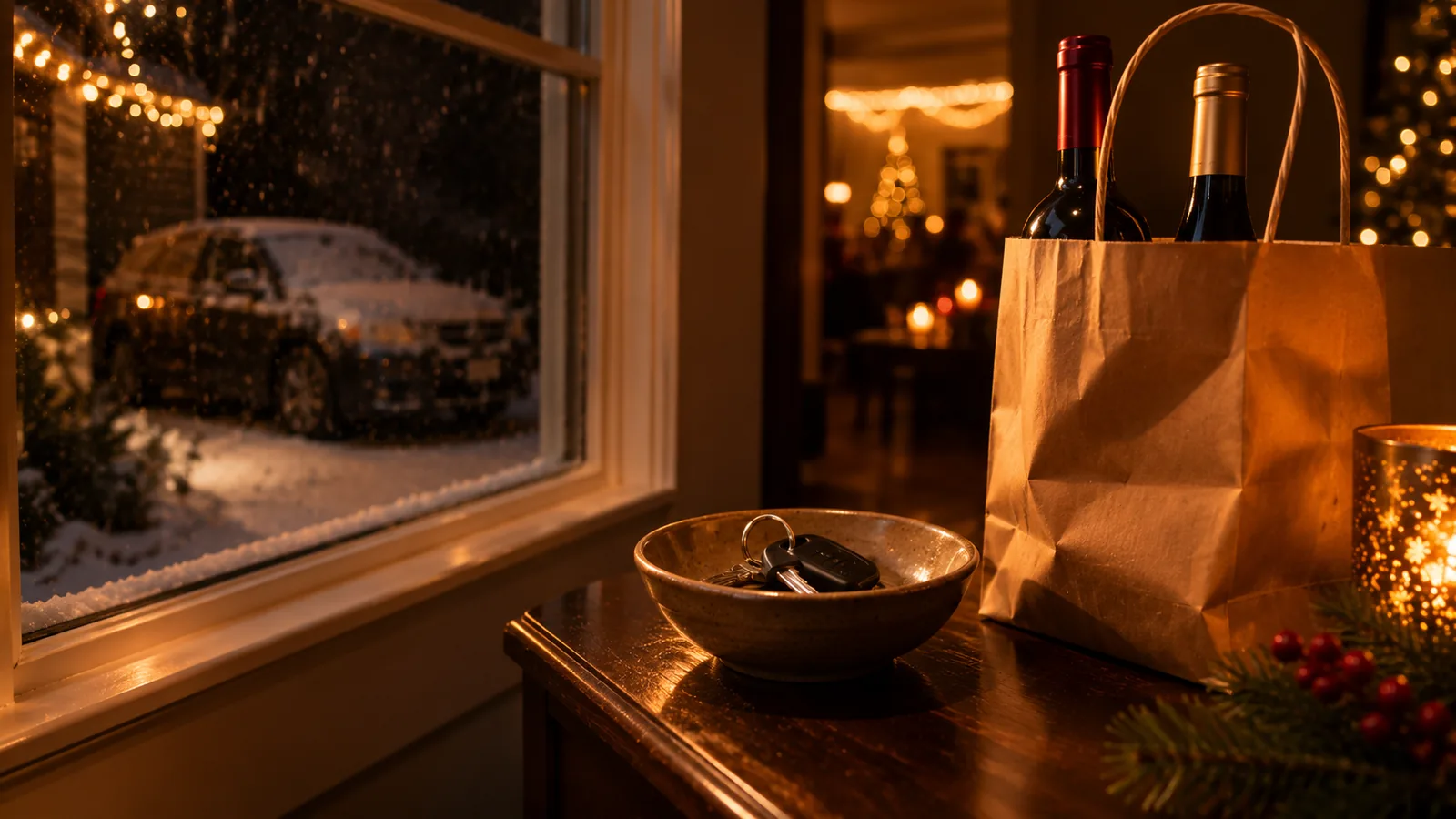
It's the most predictable bad drive of the holiday season, and in Ontario it's usually pointless anyway: most LCBO stores close at 9 PM, 6 PM on Sundays, and corner stores can't sell spirits at all.
A few things that actually work:
- Buy more than you think you'll need. Our party calculator gives you real numbers by guest count.
- Pick the designated driver before the first drink, not after the third.
- Get the top-up delivered. In Ontario, licensed delivery runs until 11 PM. Here's how late you can get alcohol delivered.
- If you're touring Niagara wineries, book a tour or a driver. Tasting pours at three or four wineries add up to several glasses.
Where After Dark Quick fits
We deliver beer, wine and spirits to homes, rentals and hotels across Niagara Falls, St. Catharines, Niagara-on-the-Lake and the rest of Niagara, plus Hamilton and Burlington, from 9 AM until the legal 11 PM cutoff. The car stays in the driveway.
- Nobody drives. We bring the order to your door, usually in under 60 minutes across our core Niagara zone.
- The full menu, including the spirits corner stores can't sell.
- 19+, ID checked at the door, every order. Our drivers are Smart Serve certified, and by law they can't hand an order to anyone who appears intoxicated, so order early in the night.
- Order by phone, any time. No app, no account. Your total is quoted up front and you pay at the door.
FAQ — Legal alcohol limit in Ontario
What is the legal alcohol limit for driving in Ontario? 0.08 is the criminal limit, meaning 80 mg of alcohol per 100 mL of blood. But Ontario suspends your licence at the roadside from 0.05, and drivers 21 and under, novice drivers and commercial drivers must be at zero.
How many drinks can you have and drive in Ontario? There's no safe number. It depends on your weight, sex, food and how fast you drank. By standard estimates, two drinks in an hour can put a smaller woman in the 0.05 warn range, and four in two hours can do the same to an average-sized man. If you're 21 or under or have a G1 or G2, the answer is zero.
How many beers can I drink and drive in Ontario? Fewer than you'd guess, and possibly none. A 341 mL bottle of 5% beer is one standard drink, but a 20 oz pub pint is about 1.7 and a 7% tall can is about 2. The only way to be sure you're under the limit is not to drink before you drive.
What is the warn range in Ontario? A BAC from 0.05 to 0.079. It isn't a criminal offence, but it brings an immediate licence suspension of 7 days the first time, 14 the second and 30 the third, with penalties of $250 to $450 and mandatory education or treatment.
What is the legal alcohol limit for G2 drivers in Ontario? Zero. G1, G2, M1 and M2 licence holders, and every driver 21 or under, must have no alcohol in their system. A first offence brings a 7-day roadside suspension and a $250 penalty, and a conviction adds a fine of $60 to $1,000.
What happens if you blow over 0.08 in Ontario? An immediate 90-day licence suspension, a 7-day vehicle impoundment and a $550 penalty, then a criminal charge. A first conviction carries a minimum $1,000 fine and at least a one-year licence suspension, followed by an ignition interlock.
Can police make you take a breathalyzer without a reason in Ontario? Yes. Since December 2018, the Criminal Code lets an officer with an approved screening device demand a breath sample from any driver they've lawfully stopped, including at RIDE checks. Refusing carries the same penalties as failing, plus a $2,000 minimum fine.
Can you have open alcohol in your car in Ontario? Not within reach. Alcohol in a vehicle must be unopened with the seal unbroken, or packed in closed baggage out of reach of everyone in the car, which in practice means the trunk. That includes recorked wine and half-finished bottles.
How long after drinking can I drive? Longer than most people think. Your body clears roughly one standard drink an hour, and coffee or food doesn't speed it up. After a heavy night, you can still be in the warn range or over the limit the next morning.
When does the Festive RIDE campaign start in Ontario? In late November. In 2025, the OPP's Festive RIDE campaign ran from November 20 to New Year's Day. Local police services, including in Hamilton and Niagara, run their own holiday RIDE checks over the same weeks.
The one thing to take away
Ontario's legal alcohol limit is 0.08 on paper, but 0.05 in practice, and zero for young and new drivers. No chart can tell you how many drinks keeps you under it, and the penalties in 2026 are steeper than they've ever been.
The simple fix is to decide before the first drink that nobody's driving. If you're in Niagara or Hamilton and the party runs low, we deliver beer, wine and spirits until 11 PM. Call 416-627-7846, and the keys can stay where they are.